

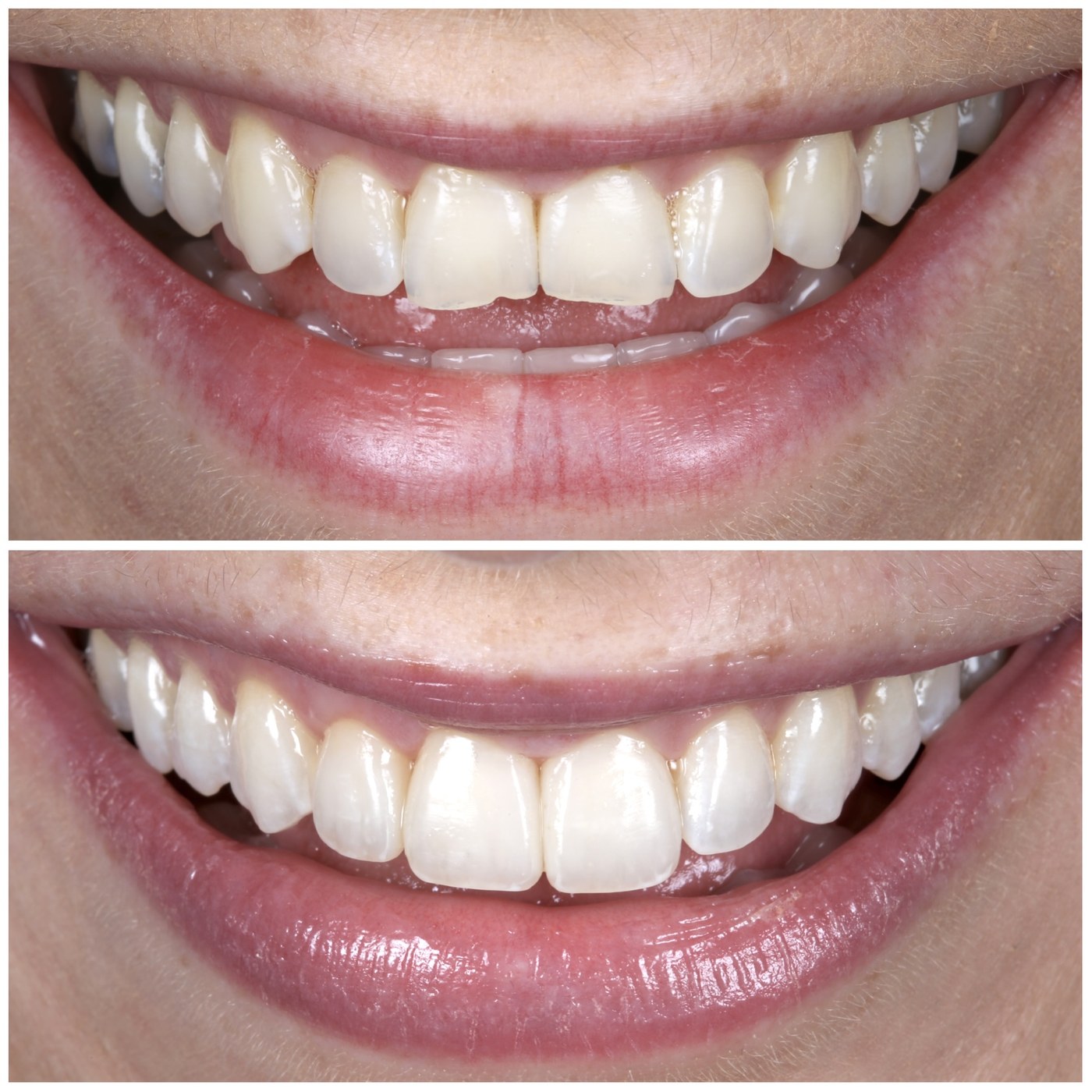
Most people arrive at a smile makeover consultation having already decided what they want. “I’d like veneers.” “Can you just bond these?” And we get it — you have seen a result you liked somewhere and you want that.
Here is the honest answer, though: the treatment is not really the starting point. Your teeth are. Composite bonding, porcelain veneers and crowns are not three grades of the same thing, cheap to expensive. They do genuinely different jobs, and which one suits you is decided mostly by how much healthy tooth you still have. So let us walk through how we actually make that call, tooth by tooth, and what each route involves in Dublin in 2026.
What are the smile makeover options in Dublin?
A Dublin smile makeover is usually built from three treatments: composite bonding at €250–€450 per tooth, hand-layered feldspathic porcelain veneers at €1,200, and ceramic crowns at €1,050.
Those are the three workhorses. Everything else — whitening at €350, orthodontics, gum work, an implant to replace something missing — is either preparation for those treatments or a supporting act around them.
The quick version of what each one does:
- Composite bonding — tooth-coloured resin sculpted onto the tooth by hand, in the chair, usually in one visit. It adds material. It requires no removal of healthy tooth structure.
- Porcelain veneers — a thin ceramic facing made by a ceramist and bonded to the front of the tooth. It replaces the visible surface, and needs a small amount of enamel removed first, typically 0.3 to 0.5mm.
- Crowns — a ceramic covering over the whole tooth. It protects a tooth that has lost too much of itself to be safe on its own.
Read that list again and you will notice something. Only one of them is really a cosmetic treatment in isolation. The other two are structural decisions that happen to also look good.
How do we actually choose between bonding, veneers and crowns?
The deciding factor is how much healthy tooth structure is left, not budget. Bonding adds to a tooth, a veneer replaces its front surface, and a crown covers a compromised tooth.
We really do think about it in that order. When you sit in the chair we are looking at each tooth and asking one question before any other: how much of this tooth is still sound, natural enamel and dentine?
If the answer is “nearly all of it”, we should be doing the least invasive thing that gets you the result. That is usually bonding. If the answer is “the tooth is intact but the front of it is the problem — the shape, the colour, the position”, a veneer becomes the better long-term answer. And if the answer is “there is not much tooth left here”, the conversation changes entirely, because now we are not decorating a tooth, we are keeping it.
Why this matters more than it sounds: enamel is the thing that makes cosmetic dentistry last. Porcelain bonded to enamel behaves very differently to porcelain bonded to dentine or to old filling material. So every millimetre of healthy tooth we can leave alone is a millimetre working in your favour ten years from now. That is the whole reason we are conservative about this — not caution for its own sake.
When is composite bonding the right option?
Composite bonding suits intact teeth that need reshaping rather than rebuilding, costs €250 to €450 per tooth in Dublin, and is usually completed in a single appointment without any anaesthetic.
This is a favourite treatment of ours, genuinely. Bonding is the right call when the teeth underneath are healthy and the issue is cosmetic: small gaps, chips, teeth that are a bit short or uneven, worn edges, peg-shaped lateral incisors, discolouration that whitening alone will not shift.

What makes it so appealing is that it is additive. We are not cutting anything away to make room — we are building onto what is already there, layer by layer, matching colour and translucency by hand. If your enamel is in good shape, that is a very hard thing to argue with.
The research backs up the durability question, too. A systematic review in the Journal of Conservative Dentistry looking at more than 75,000 composite restorations found these perform well over many years, with fracture — not decay — being the usual reason one eventually needs replacing. That matches what we see: bonding does not fail dramatically, it chips, and a chip is repairable in a single visit. Technique matters enormously, which is why we place bonding under rubber-dam isolation. A dry field is not a detail, it is most of the bond strength.

Where bonding is the wrong answer: heavily filled teeth, teeth that are already broken down, and bites that are chewing through material faster than we can place it.
When are porcelain veneers the right option?
Porcelain veneers suit intact teeth needing a change in shape, colour or position that bonding cannot hold, cost €1,200 per tooth in Dublin, and require 0.3 to 0.5mm of enamel reduction.
The honest distinction between a veneer and bonding is not “better” and “worse”. It is stability. Porcelain does not stain, it does not pick up colour from coffee or red wine over the years, and it holds its polish in a way composite simply cannot. If you want a significant change in shade or shape and you want it to look the same in twelve years as it does on the day it goes in, porcelain is the material that does that.
The evidence is unusually good here. A systematic review in the European Journal of Dentistry reported survival of 96% at ten years and 91% at both fifteen and twenty years for porcelain veneers bonded to enamel, with ceramic fracture the most common failure at roughly 45% of cases. Note the condition attached to that number — bonded to enamel. Veneers on prepared, dentine-exposed teeth do not enjoy those figures. This is exactly why we are so careful about preparation depth.
Our veneers are hand-layered feldspathic porcelain, built by our ceramist Vladimir Savchuk. That choice costs us more time and it costs more to make, but feldspathic is the material that handles light the way a real tooth does — and light is what the eye actually reads when it decides whether a smile looks natural. If you want the longer version of that argument, we wrote it up in our guide to feldspathic porcelain veneers, and the survival data on how long veneers last.
If you are torn specifically between these first two routes, we have a dedicated comparison of composite bonding versus porcelain veneers that goes deeper than we can here.
When does a tooth genuinely need a crown instead?
A crown becomes necessary when a tooth has lost so much structure that bonding or a veneer would have nothing sound to hold onto. Milled ceramic crowns are €1,050 in Dublin.
Look, we know a crown sounds like the heavier option, and people often ask if they can have “just a veneer” instead. Sometimes the answer is yes. Often it is no, and it is worth understanding why.
A veneer covers the front. If the back and the biting surface of a tooth are also compromised — cracked, filled, root-treated — a veneer leaves all of that unsupported. You would be bonding a beautiful facade to a structure that is still fragile, and the tooth can fracture behind it. A crown wraps the whole tooth and holds it together, which is a completely different mechanical job.
The longevity data is reassuring: a large practice-based study in the Journal of Dentistry following over 3,400 crowns found annual failure rates below 1%, meaning the vast majority of well-made crowns are still going strong after a decade. That same study also found that root-treated teeth carry a higher failure risk — which is precisely the group that most needs the crown in the first place.
A hand-layered feldspathic anterior crown is €1,200, and we use it where a front tooth is very prominent and needs the same lifelike translucency as a veneer. Back teeth get milled high-strength ceramic at €1,050. If you want the detail on which material goes where, we covered it in which type of dental crown is right for your tooth, and the crown-or-veneer question specifically in dental crown vs veneer.
One thing worth saying plainly: where an inlay or onlay will do the job instead of a full crown, we will tell you. It is the same €1,050 either way, so there is no financial reason for us to steer you toward the bigger option.
What if different teeth need different treatments?
Most real smile makeovers in Dublin are a mix of treatments: porcelain veneers on the most visible front teeth, bonding on the teeth either side, and a crown where one was rebuilt before.
This is the part that surprises people most, and it is probably the single most useful thing in this article.
The idea of “getting veneers” as one uniform decision across ten teeth is largely a marketing construct. Real mouths are not uniform. You might have two centrals that have been chipped and repaired several times, a lateral that is slightly peg-shaped, a canine that is perfectly healthy and just needs its edge reshaped, and a premolar with a large old filling that has been quietly cracking for years. Those four teeth want four different answers.
A good plan matches the treatment to the tooth. It costs less than treating everything as if it were the worst tooth in the mouth, and it removes far less healthy tooth structure than a blanket approach. The design challenge is making the mix invisible — and that is genuinely a skill question, because composite and porcelain reflect light differently. Getting a bonded lateral to sit convincingly beside a porcelain central takes a dentist and a ceramist who talk to each other.
Be a little careful of any plan that treats every tooth identically without a reason for it. Uniformity is easy to sell and it is often the tell of a result that will not age well — something we went into properly in how to judge a smile makeover result before you commit.
Should crooked teeth be straightened before any of this?
Where teeth are significantly crowded or rotated, straightening first almost always means less enamel is removed later — and orthodontics at ISCD typically runs €2,500 to €3,500 for a case.
Here is a trade-off we would rather you heard honestly. Veneers and bonding can mask mild crowding. They can make a slightly rotated tooth look straight. But the way they do that is by adding material to one side and reducing on the other — and if the misalignment is significant, that means removing more healthy tooth than we would like.
So when the crowding is real, we will suggest straightening first. It takes longer and it adds a stage, but you end up with less enamel removed, thinner veneers, and a result bonded to more natural tooth. Which, as above, is the thing that predicts how long it all lasts.
We do not provide orthodontics at Docklands. That work is done by the specialist orthodontists at ISCD (the Institute of Specialist and Cosmetic Dentistry), the specialist practice we work closely with — Dr. Susan O’Connell handles the ortho phase and we handle the restorative work afterwards. We wrote about when this sequencing is worth it in orthodontics before veneers.
What if a tooth is missing altogether?
A missing tooth changes the sequence — the gap is restored first, usually with a dental implant from €3,000 to €3,500 all-in in Dublin, before any cosmetic work is designed around it.
You cannot design a smile around a space. If there is a tooth missing, replacing it comes first, because it determines where everything else sits and how your bite loads.
A single implant with its porcelain crown is from €3,000 to €3,500 all in — that is €1,650 for the surgical placement including the abutment, and €1,350 for the crown itself. Those two figures are also available as standalone stages, which is why you will sometimes see one of them quoted alone by other clinics and wonder why the total does not add up. Surgical placement is done by a specialist oral surgeon; we plan and place the final restoration. Full detail is in our dental implant cost breakdown.
Can you see the plan before you commit to anything?
Digital Smile Design is €350 at our Dublin practice and lets you see the proposed result, and in most cases physically try it in your own mouth, before a single tooth is touched.
We think this matters more than almost anything else on this page. Photographs, video and measurements go into a design; the design becomes a physical trial smile you can wear and look at in a mirror in normal daylight.
It is also the point at which the route decision gets made properly rather than theoretically. Seeing the mock-up is often what tells us a particular tooth needs a veneer rather than bonding — or, just as often, that bonding will do everything you wanted and the veneers were never necessary. More than once that conversation has made someone’s treatment plan smaller. We are fine with that. The process is explained in full in our guide to Digital Smile Design in Dublin.
What does each option cost, and how long does each one last?
In Dublin, composite bonding is €250 to €450 per tooth and lasts five to ten years, feldspathic veneers are €1,200 with over 90% surviving at fifteen years, and ceramic crowns at €1,050.
Rough per-tooth figures, all current 2026 prices from our price list:
- Composite bonding — €250 to €450 per tooth
- Composite veneer — €450 per tooth
- Hand-layered feldspathic veneer — €1,200 per tooth
- Milled ceramic crown, inlay or onlay — €1,050
- Hand-layered feldspathic anterior crown — €1,200
- Digital Smile Design — €350
- Single dental implant, all in — from €3,000 to €3,500
- Hygiene visit — €95, night guard — €180 (hard/soft €250)
For what a whole makeover comes to once you put a plan together, we broke the tiers down properly in smile makeover cost in Dublin. And if you want to see what a complex, multi-stage case actually looked like start to finish, there is a full case story.
We do not do discounts or limited-time offers on any of this. The price is the price, you get it in writing before anything starts, and we would honestly rather talk you into a smaller plan that suits your teeth than a bigger one that does not.
Frequently asked questions
Can I have veneers on some teeth and bonding on others?
Yes, and it is very common — it is usually the better plan, not a compromise. Porcelain tends to go on the most visible teeth doing the most cosmetic work, with bonding on teeth that need less. The skill is in blending them so the join is invisible.
Is composite bonding reversible if I change my mind?
No, and be wary of anyone who tells you it is. Bonding requires no removal of healthy tooth structure, which is a real and significant advantage — but the surface is lightly etched to make the resin stick, so removing it is not a return to an untouched tooth. Non-invasive is the accurate word. Reversible is not.
Will I need to replace all of this eventually?
Some of it, at some point. Bonding realistically wants refreshing or repolishing every five to ten years. Porcelain veneers and crowns last considerably longer — the research puts well-made ones above 90% at fifteen years. Night grinding is the biggest variable, which is why a €180 night guard is often the cheapest thing you will buy.
How do I find out which option I actually need?
An examination is €80 and it is the only honest way to answer it. We will look at how much healthy tooth you have, your bite, and your gums, then tell you what each tooth needs — which sometimes turns out to be less than you expected.
Come and talk it through
If you have been going back and forth on bonding versus veneers versus crowns, the most useful next step is simply to have someone look at your teeth and tell you honestly what they need. No pressure, no hard sell, just a conversation about what would work and what it would cost.
Call us on 01 636 0192, email hello@docklandsdental.ie, or drop into us at 1 Forbes Street, Grand Canal Dock, Dublin 2, D02 FN53. You can also read more about our cosmetic bonding, porcelain veneers and crowns, inlays and onlays.
Written by Dr. Gregg Barry, BDS (UCC 2008), Docklands Dental, Dublin 2. Published 19 August 2026.
Weighing up your smile-makeover options? You can book a cosmetic consultation online — thirty minutes with one of our dentists to look at your teeth and talk through the options and what they would cost (€80, as listed on our price list).
Frequently asked questions
Can I have veneers on some teeth and composite bonding on others?
Yes, and it is very common — a mix is usually the better plan rather than a compromise. Porcelain veneers typically go on the most visible teeth doing the most cosmetic work, at €1,200 per tooth, with composite bonding at €250 to €450 per tooth on teeth needing less. The skill is in blending the two materials so the join is invisible.
Is composite bonding reversible?
No. Composite bonding requires no removal of healthy tooth structure, which is a genuine advantage, but the enamel surface is lightly etched so the resin bonds — so removing it is not a return to an untouched tooth. Non-invasive is accurate; reversible is not.
